A catastrophic landslide struck the outskirts of Chongqing, China on July 17, 2026, claiming at least eight lives and leaving 34 people unaccounted for as hundreds of rescuers desperately search through tons of debris in a race against time.
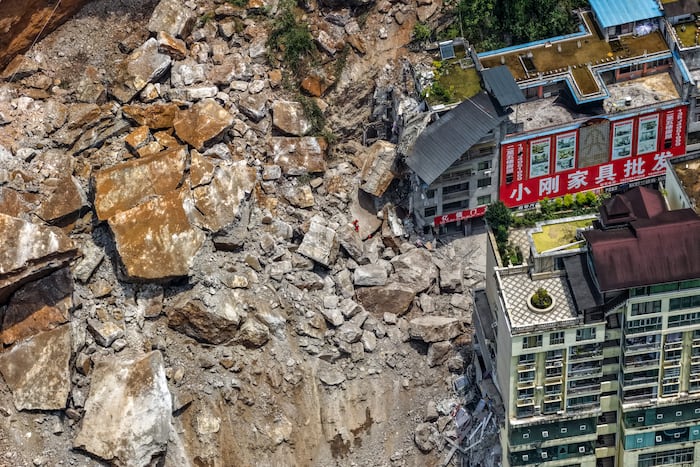
The disaster unfolded at approximately 9:08 a.m. local time in Pengshui County, located on the outer edge of the sprawling Chongqing municipality in southwestern China. Massive volumes of rocks and soil cascaded down the mountainside, engulfing more than 10 residential buildings and forcing the emergency evacuation of over 1,100 residents from the affected area.
Massive Scale of Destruction Revealed
According to officials from Pengshui County’s Planning and Natural Resources department, the landslide carried approximately 18,000 cubic meters of rocks and debris—equivalent to roughly 636,000 cubic feet of material. Perhaps most alarming was the revelation that the largest single rock measured around 3,000 cubic meters, or about 106,000 cubic feet, demonstrating the tremendous force of nature that residents faced.
Pengshui County Mayor Ren Xujiang confirmed that rescue teams successfully pulled 10 survivors from the rubble, though two of them sustained serious injuries requiring immediate medical attention. The rescue operation has mobilized more than 800 emergency responders who are working around the clock at the disaster site.
Chinese President Xi Jinping has directed authorities to determine the cause of the disaster, according to state media reports, signaling the national importance being placed on understanding and preventing similar tragedies.
Warning Signs and Evacuation Efforts
In a tragic twist, local residents reported that warning signs had appeared before the catastrophe struck. According to the Chongqing Daily newspaper, community members noticed small rocks falling and heard unusual sounds emanating from the hillside. Local officials and community leaders had begun organizing an evacuation when the main landslide occurred, potentially saving many more lives.
The rescue efforts have been significantly complicated by several factors:
- Unstable terrain that poses ongoing risks to rescue workers
- The threat of secondary landslides from remaining loose rock formations
- Scattered unstable rock masses identified at the top and along the sides of the steep cliff
- Extreme weather conditions that could trigger further collapse
Experts conducting field inspections have warned that persistent danger remains, particularly during heavy rainfall or extended periods of clear, hot weather, both of which could destabilize the already compromised mountainside.
Emergency Response and Relief Operations
Authorities have implemented sweeping safety measures in response to the disaster. Water, electricity, and gas supplies have been cut off within a one-kilometer radius of the landslide site to prevent additional hazards and disruptions. Advanced technology has also been deployed, with drones conducting aerial surveys of the affected areas to assist in mapping the destruction and locating potential survivors.
The Chinese government has dispatched more than 13,000 disaster relief items to the Chongqing region, including:
- Emergency tents for displaced families
- Folding beds for temporary shelters
- Family emergency kits with essential supplies
- Additional rescue equipment and resources
Images broadcast by state television showed the dramatic moment when part of the mountainside collapsed onto the residential neighborhood. Several buildings remained standing near the collapse site, though they sustained significant damage, including structures estimated at five and fifteen stories tall. Large slabs of rock had slid past buildings and into a waterway below.
Geographic Factors and Regional Context
Pengshui County sits in the southeastern portion of Chongqing, near the borders with Hubei and Guizhou provinces. The rain-triggered landslide occurred near a section of the Wujiang River, which winds through karst mountain terrain characterized by small towns and agricultural terraces carved into the hillsides.
Social media footage showed rescue workers in orange uniforms operating excavators to clear debris, with one dramatic clip capturing the moment a team successfully extracted a survivor from beneath the rubble. The images underscored both the devastation and the determined efforts of emergency responders working in extremely dangerous conditions.
As search and rescue operations continue, authorities remain focused on locating the 34 people still missing while ensuring the safety of the rescue teams and remaining residents in the affected area. The investigation into the exact cause of the landslide is ongoing as the community begins the long process of recovery from this devastating natural disaster.