The legendary Mount Olympus, the mythological dwelling place of the ancient Greek gods, is now under consideration for inclusion in UNESCO’s prestigious World Heritage List. The nomination will be reviewed when the World Heritage Committee convenes in Busan, South Korea, from July 20 through July 29, 2026, marking a significant moment for Greece’s most iconic natural landmark.
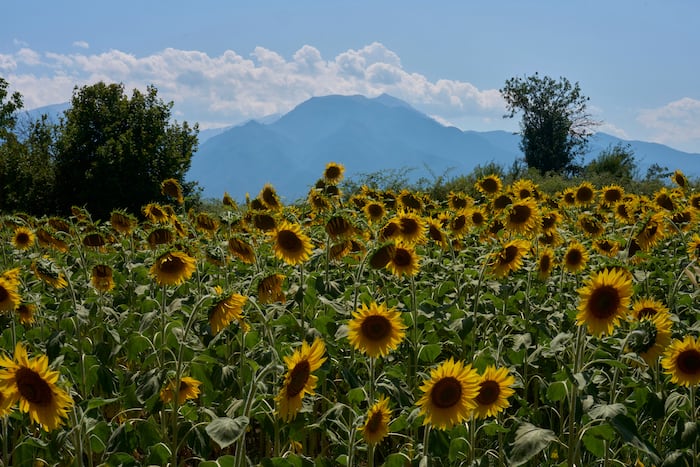
Rising majestically to 2,918 meters (9,573 feet) from a base that sits practically at sea level, Mount Olympus has captivated human imagination for thousands of years. Snow-capped throughout much of the year, its craggy, mist-shrouded peaks were believed by ancient Greeks to house the throne of Zeus, the king of all gods, making it one of the most spiritually significant locations in Western civilization.
A Mountain Steeped in Mythology and History
Few places on Earth carry the cultural weight of Mount Olympus. According to ancient Greek mythology, this was the site where Zeus established his divine court after overthrowing his father, Cronus, following a decade-long war that ended the reign of the Titans. The mountain served as home to the twelve Olympian gods who ruled over the ancient Greek world.
“Olympus is our life. It is the place we grew up in. It is the place we see every day, but at the same time, it is also a place which carries with it myth, history, biodiversity, extraordinary beauty and a very great cultural weight,” stated Evagelos Geroliolios, mayor of Dion-Olympus, based in Litochoro, the mountain’s main town.
Archaeological excavations on one of Olympus’s lower peaks have uncovered an open-air sanctuary with artifacts dating back to the Hellenistic period (323 B.C. to 30 B.C.). Historical records indicate that the ancient philosopher Plutarch wrote about religious processions to this very peak during the 2nd century, where animal sacrifices were offered to Zeus.
Religious Significance Spanning Multiple Eras
The spiritual importance of Mount Olympus extends far beyond its ancient Greek heritage. The mountain continued to hold religious significance well into the Christian era, featuring several remarkable sites:
- A chapel on Prophet Elias peak at 2,803 meters, believed to be the highest altitude chapel in the Christian Orthodox world
- The remains of a monastery in Enipeas Gorge, founded in 1542
- The Holy Cave of St. Dionysios, a chapel built into a cave featuring a small spring believed to carry holy water
- An open-air sanctuary with archaeological finds from the Hellenistic period
Interest in Mount Olympus is expected to surge with the theatrical release during July 2026 of Christopher Nolan’s “The Odyssey,” a new adaptation of Homer’s legendary epic. In this interpretation, the mountain serves as the dramatic home of Zeus and the Olympian gods who influence the hero Odysseus throughout his famous journey.
The Path to UNESCO Recognition
Greece initiated the formal process to have Mount Olympus recognized as a World Heritage site back in 2014, when it was inscribed on the country’s Tentative List. This step is mandatory for any nomination and allows countries to formally submit sites for consideration over the following five to ten years.
The nomination process involves several critical stages:
- A preliminary assessment of the proposed site
- Submission of a comprehensive nomination file
- A 14-month evaluation period by advisory bodies
- Review by the International Council on Monuments and Sites (ICOMOS)
- Assessment by the International Union for Conservation of Nature
- Final vote by representatives of 21 countries during the annual committee meeting
However, UNESCO recognition is far from guaranteed. A draft of the Busan meeting’s agenda suggests the committee may refer the nomination back to Greece, requesting additional details before making a final determination.
Biodiversity Meets Cultural Heritage
What makes Mount Olympus particularly unique is its combination of natural wonders and cultural significance. The mountain’s slopes, which extend nearly to the Mediterranean Sea, host an impressive array of flora and fauna, including several endemic species found nowhere else on Earth. This remarkable blend of mythology, history, natural beauty, and biodiversity forms the foundation of Greece’s nomination as a mixed cultural and natural site.
“It is a place we love. It is a place that many people from all over the world visit to see, to live, to experience. We want to protect it,” Geroliolios emphasized, adding that inclusion on UNESCO’s list would be “something very big that goes beyond not just local boundaries, but national boundaries. It is something that concerns the entire world.”
As the World Heritage Committee prepares to deliberate on this historic nomination, millions around the globe await the decision that could formally recognize Mount Olympus as a treasure belonging not just to Greece, but to all of humanity.