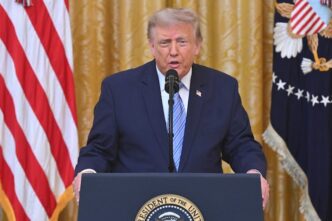
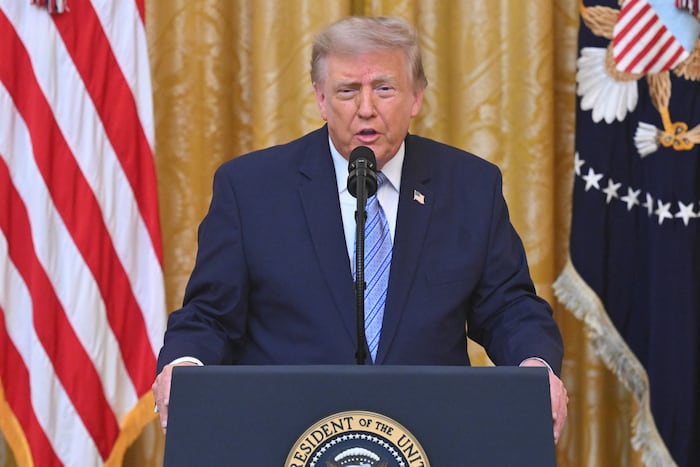
President Donald Trump delivered a primetime address to the nation on July 16, 2026, reviving his long-standing campaign to cast doubt on the legitimacy of American elections. The speech, which aired during evening hours when viewership peaks, focused on promoting stricter voting legislation ahead of the upcoming midterm elections while revisiting disputed claims about his 2020 electoral defeat.
President Revisits 2020 Election Claims Despite Current Crises
The timing of Trump’s address raised eyebrows among political analysts, as the nation currently faces pressing concerns including rising cost of living, ongoing military operations against Iran with no clear resolution in sight, and an immigration enforcement strategy that has drawn criticism from both political parties due to reports of dangerous tactics.
Rather than addressing these immediate challenges, the president chose to focus on electoral integrity, a subject that remains deeply controversial given the events of January 6, 2021. On that date, supporters of Trump stormed the United States Capitol in a violent attack following his repeated assertions that the 2020 election had been stolen from him.
“America is back and doing really well, but we still have a major challenge that must be urgently addressed, because no country can be great without fair and honest elections,” Trump stated during his address.
The speech marked an unusual moment in presidential communications, as Trump complained about his single electoral loss while serving his second term in office. He announced the declassification of documents related to both the 2020 presidential race and the 2018 midterm elections, during which Republicans suffered significant losses.
Intelligence Community and Election Security Experts Respond
Former intelligence officials quickly criticized the president’s remarks. Sue Gordon, who served as principal deputy director of national intelligence during Trump’s first administration, called the address deeply troubling.
Gordon emphasized that intelligence agencies throughout Trump’s initial term expressed serious concerns about foreign interference in American elections. However, she noted that the president repeatedly dismissed these warnings, particularly those related to investigations into his campaign’s connections with Russia.
The speech contained several notable omissions and contradictions that observers were quick to highlight:
- Trump focused heavily on alleged Chinese interference while largely ignoring Russia, despite intelligence reports indicating Russian efforts to support his candidacies in both 2016 and 2020
- The president did not criticize Chinese President Xi Jinping, whom he has frequently praised in public statements
- No doubts were raised about the legitimacy of Trump’s own electoral victories in 2016 and 2024
- Claims presented lacked context and failed to provide evidence that actual votes had been manipulated or election outcomes altered
Election Security Realities Contradict Presidential Claims
Experts in election security have consistently pointed to the decentralized nature of American voting as a significant strength rather than a vulnerability. With more than 10,000 different jurisdictions conducting elections under varying rules and procedures, the system presents an extraordinarily complex target that would be nearly impossible to manipulate on a scale large enough to affect national outcomes.
Multiple audits and reviews conducted following the 2020 election, many led by Republican officials including Trump’s own Attorney General at the time, found no evidence of significant fraud. No credible intelligence has emerged suggesting that foreign actors successfully manipulated vote counts in that election.
The White House released a website containing declassified documents alongside the speech, though critics noted the materials were presented without proper context and appeared to include selectively chosen portions of investigation files and intelligence analyses.
Voter ID Legislation Stalls in Congress
A central purpose of the address was to generate support for a strict voter identification bill currently stalled in Congress. The legislation has failed to advance due to insufficient support, notably lacking enough votes even among Republican lawmakers to move forward.
The push for more restrictive voting laws comes as the nation prepares for midterm elections that will determine control of Congress. Democrats have consistently argued that such measures disproportionately affect minority voters and low-income communities, while Republicans maintain they are necessary to ensure electoral integrity.
For Miami’s Latin community, which has played an increasingly important role in Florida politics, these debates over voting access and election security carry particular significance as the midterm campaign season intensifies.