Arizona Republicans headed to the polls on July 22, 2026, to select their nominees for governor and other critical state offices, marking a decisive moment for a party seeking to reclaim power in a state that was once a reliable Republican stronghold.
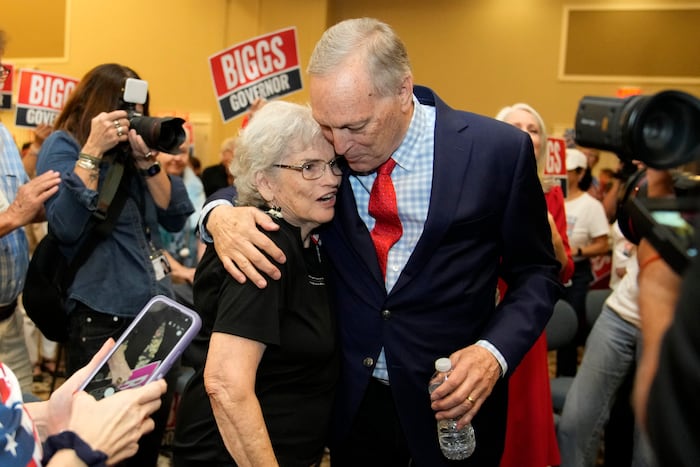
The gubernatorial primary featured a compelling clash between two U.S. Representatives from the Phoenix metropolitan area: Andy Biggs and David Schweikert. Both lawmakers represent neighboring districts but offer dramatically different visions for the Republican Party’s future in this crucial battleground state.
Two Republicans, Two Very Different Approaches
The race to challenge Democratic Governor Katie Hobbs, widely considered the most vulnerable Democratic governor in the nation heading into this election cycle, has exposed deep divisions within Arizona’s Republican Party about the best path forward.
Representative Andy Biggs, who served as chair of the House Freedom Caucus from 2019 to 2022, has positioned himself as a stalwart Trump ally. Armed with an endorsement from President Donald Trump and backed by the grassroots organizing power of Turning Point Action, Biggs has argued that party unity behind the MAGA movement is the winning formula.
Biggs has consistently maintained that his ability to unite the Republican base will be essential for victory in the general election against Governor Hobbs.
In stark contrast, Representative David Schweikert has pursued a more measured approach, emphasizing his fiscal conservative credentials and pro-business stance. His strategy is designed to appeal to voters who may have grown weary of the confrontational style exemplified by previous Trump-backed candidates like Kari Lake, who lost the gubernatorial race four years ago.
Election Day Challenges in Maricopa County
The primary day was not without its complications. Election officials in Maricopa County, which encompasses the Phoenix metropolitan area and accounts for approximately two-thirds of the state’s voters, reported several issues:
- Two polling sites experienced power outages, requiring voters to be redirected to nearby locations
- Multiple polling places encountered technical difficulties early in the day
- Connectivity issues with electronic poll books caused temporary delays before being resolved
Maricopa County has remained under intense scrutiny since the 2020 presidential election, becoming a focal point for election-related conspiracy theories. County officials have worked to address concerns while maintaining election integrity.
Congressional Battleground Takes Shape
Beyond the gubernatorial contest, Republicans and Democrats alike participated in hotly contested primaries for Schweikert’s 1st Congressional District seat, considered one of the most competitive House races in the country.
The district, anchored in Scottsdale, includes a significant population of white, highly educated, and affluent voters who have increasingly distanced themselves from the Republican Party during the Trump era. This demographic shift has made the seat a top priority for both parties in the battle for congressional control.
On the Republican side, former Arizona Cardinals kicker Jay Feely secured Trump’s endorsement but faced criticism for residing outside the district boundaries. His opponents included former state legislator Joseph Chaplik, who enjoys strong support among grassroots activists, and businessperson John Trobough.
Democrats saw their own internal battle, with the Democratic Congressional Campaign Committee controversially endorsing Marlene Galán-Woods, a former television news anchor and former Republican. Her main challenger, Amish Shah, an emergency medicine physician and former state legislator, narrowly lost to Schweikert in the 2024 election cycle.
Stakes Beyond the Governor’s Mansion
Arizona Republicans also selected nominees for secretary of state and attorney general on July 22, 2026. These positions carry significant weight given their authority over election administration in a state that played a central role in Trump’s efforts to challenge his 2020 election loss.
The outcomes of these primaries will set the stage for what promises to be one of the most closely watched state elections in the nation. Arizona’s transformation from a reliably red state to a competitive battleground has made it essential territory for both parties looking ahead to future electoral maps.
For Miami’s Latino community with ties to Arizona, these developments underscore the evolving political landscape in Sun Belt states where demographic changes continue to reshape the electoral calculus for both Republicans and Democrats.