The United States State Department unveiled a comprehensive 100-page report on July 20, 2026, detailing what officials describe as decades of Cuban efforts to undermine American interests through left-wing activists, militant extremists, and foreign alliances dating back to the 1960s.
The explosive document paints a picture of the Cuban government operating as a conduit for adversarial nations including Iran, Russia, and China, while allegedly using espionage operations to penetrate the highest levels of the federal government. According to the report, Havana has been instrumental in fostering what officials characterize as a growing wave of left-wing terrorism targeting American institutions.
Secretary Rubio Exposes Cuban Subversion Campaign
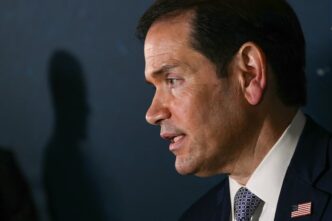
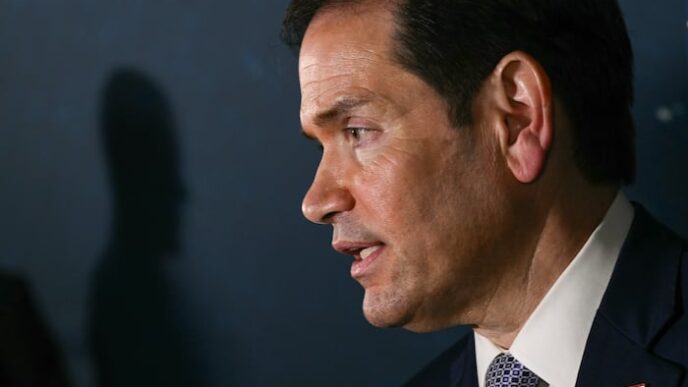
Secretary of State Marco Rubio, the Miami-born Cuban-American diplomat, released a statement on social media platform X addressing the gravity of the findings.
“For more than six decades, the Cuban regime has been the leading sponsor of radical leftism and Third Worldism in the United States. The State Department is exposing the full history of Cuban espionage and subversion in our country.”
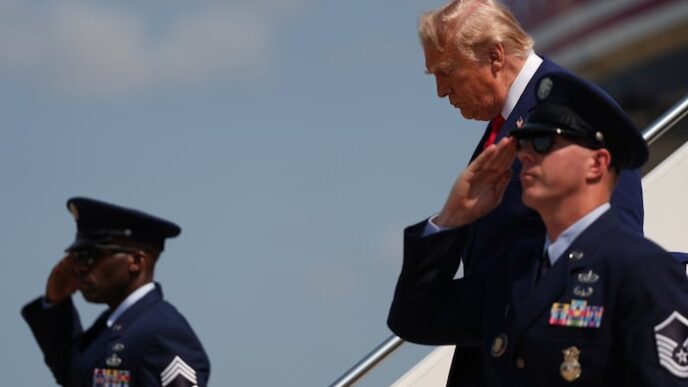
The report arrives as a continuation of the Trump administration’s hardline stance against the island nation. President Donald Trump reinstated Cuba’s designation as a state sponsor of terrorism in 2021 and again in 2025, both actions resulting in renewed economic sanctions against the communist government.
Military Alliances and Drone Warfare Concerns
Perhaps most alarming among the report’s revelations are details about military cooperation between Cuba and Iran. According to the document, Cuban military officials have consulted with Iranian advisors regarding asymmetrical drone warfare capabilities for potential conflicts with the United States. The alliance reportedly provides Cuba access to attack drone technology.
The State Department report also draws connections between Cuba’s intelligence agency, known as the Dirección General de Inteligencia (DGI), and what officials term the “Islamist militant axis.” This network allegedly includes:
- Hamas – the Palestinian militant organization
- Hezbollah – the Lebanon-based militant group
- Popular Front for the Liberation of Palestine
U.S. Representative Carlos A. Giménez responded to the report’s release on social media, emphasizing the threat posed by the Cuban regime.
“The regime in Cuba exploits every opportunity to undermine America & any suggestion otherwise is a gross underestimation of their capability.”
Historical Ties to Extremist Movements
The report traces Cuba’s influence on American extremist movements back to the era of Fidel Castro, documenting his deliberate cultivation of relationships with radical figures. According to the document, Castro operated under what officials describe as “overriding resentment and fundamental hatred” toward the United States.
Historical connections cited in the report include Castro’s associations with:
- Huey Percy Newton – founder of the Marxist-Leninist Black Panther Party
- JoAnne Deborah Byron (Assata Shakur) – member of the Black Liberation Army
- Various American Black radical movements of the 1960s and 1970s
The Castro regime allegedly promoted the ideology that “racist Yankee imperialism” victimizing Africa, Asia, and Latin America was similarly targeting minorities within the United States, using this narrative to recruit American activists to Cuba’s cause.
Solidarity Networks and Modern Infiltration
Central to Cuba’s influence operations is the Instituto Cubano de Amistad con los Pueblos (ICAP), which the report identifies as a Havana-based foreign intelligence operation connected to more than 2,000 solidarity groups worldwide. Organizations identified as ICAP collaborators include the Ernesto “Che” Guevara Volunteer Work Brigade and the Canadian Network on Cuba.
The report accuses the Cuban regime of exploiting left-wing activists not for the benefit of ordinary Cuban citizens, who face brutal repression and restrictions on work, assembly, speech, and travel, but as tools of a comprehensive political service operation.
U.S. Senator Ashley Moody met with Cuban exiles on July 20, 2026, at the Bay of Pigs Museum in Miami’s Little Havana neighborhood to discuss the report’s findings.
“Cuba has been oppressing its people, stifling freedom.”
Espionage in American Institutions
The document details Cuba’s alleged efforts to recruit students at elite American universities, cultivating them over time to eventually infiltrate the U.S. government as spies. The report cites the case of Victor Manuel Rocha, a former U.S. ambassador to Bolivia who was exposed as a Cuban agent.
Contemporary organizations named in the report as allies of Cuban President Miguel Díaz-Canel include:
- People’s Forum – a Manhattan-based nonprofit
- Code Pink – the progressive activist organization
- Democratic Socialists of America
For Miami’s Cuban exile community, the report validates decades of warnings about the Castro and Díaz-Canel regimes’ hostility toward the United States and their willingness to collaborate with America’s adversaries to achieve their geopolitical objectives.