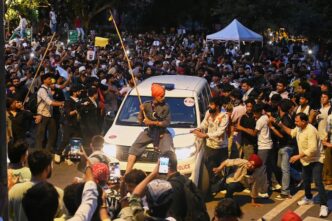
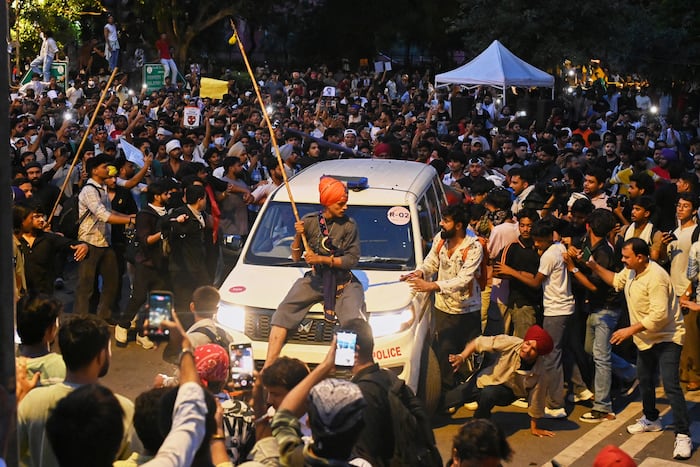
Thousands of young demonstrators transformed the streets of New Delhi into a massive encampment on July 23, 2026, defying government restrictions in what has become one of the most significant challenges to Prime Minister Narendra Modi’s administration in recent years. The protest movement, which began over allegations of leaked entrance exams, has evolved into a broader expression of youth frustration across the world’s most populous nation.
From Exam Leaks to National Movement
What started as outrage over compromised entrance examinations for medical colleges and government positions has mushroomed into a full-scale protest movement drawing participants from all walks of life. The demonstrations, which began more than a month ago, now attract not only students but also professionals and entire families who share concerns about government accountability and the future of India’s youth.
The movement’s demonstrators gathered at Jantar Mantar, a historic site in central New Delhi designated for public protests, following a night of intense confrontations with law enforcement. Police deployed tear gas and batons to disperse crowds overnight, marking the second such clash within a single week. Authorities also suspended metro services at 16 stations throughout central New Delhi in an attempt to restrict access to the demonstration areas.
The protests have been marked by several key demands from participants:
- The immediate resignation of Education Minister Dharmendra Pradhan
- Comprehensive reforms to India’s examination system
- Financial compensation for families of students who died by suicide following exam paper leaks
- Greater government accountability and transparency
- Faster prosecution of those responsible for examination fraud
Prime Minister Modi Responds to Growing Pressure
Facing escalating criticism, Prime Minister Modi publicly addressed the examination crisis for the first time on July 23, 2026, announcing the creation of fast-track courts specifically designed to handle cases related to examination paper leaks. These specialized courts aim to accelerate proceedings within India’s notoriously slow judicial system, where cases can languish for years or even decades.
“Nothing is more important than the welfare and future of our youth!” Modi wrote on the social media platform X, attempting to demonstrate his government’s commitment to addressing the crisis.
However, the announcement did little to quell the protesters’ anger. Many demonstrators argued that Modi’s response failed to address their fundamental demands for accountability and structural reform. Law student Daksh Bhargava expressed the sentiment shared by many protesters, stating that rather than offering solutions convenient for the government, Modi should work toward solutions that benefit the entire nation and set a proper example for future administrations.
The Satirical Origins of the Cockroach Movement
The protest movement derives its unusual name from the Cockroach Janta Party, a satirical political organization that launched the demonstrations. True to its irreverent origins, the movement maintains a tongue-in-cheek approach to serious political issues. When Modi announced his response to the crisis, movement founder Abhijeet Dipke responded by posting a meme featuring Education Minister Pradhan with the caption “Hi, my name is Nothing” — a direct reference to Modi’s statement about youth welfare being paramount.
The movement began as an online satire campaign in May 2026 before transitioning to street protests in June. It gained significant momentum when prominent activist Sonam Wangchuk joined the demonstrations and initiated a hunger strike that has now lasted more than three weeks. Authorities forcibly transferred Wangchuk to a hospital over the weekend, further inflaming tensions between protesters and the government.
Youth Anger Reflects Broader Economic Frustrations
For millions of young Indians, these protests represent a rare opportunity to express dissent in an environment where demonstrations against Modi’s government have frequently resulted in crackdowns on activists, opposition figures, and public gatherings. The movement’s rapid expansion beyond traditional student groups signals deeper frustrations among India’s younger generation.
India possesses one of the world’s youngest populations, with millions of young people entering a labor market that has consistently struggled to generate sufficient secure, well-paying employment opportunities. Despite years of impressive economic growth figures, many young Indians feel left behind, unable to access the prosperity that government statistics suggest should be available to them.
Opposition political parties have rallied behind the protesters, using the examination scandal to challenge the ruling government in Parliament. Solidarity demonstrations have spread to other major Indian cities, indicating that the movement has transcended its origins in the capital. The protests echo similar youth-led anti-government movements that have swept across South Asia in recent years, suggesting a regional pattern of young people demanding accountability from their leaders.