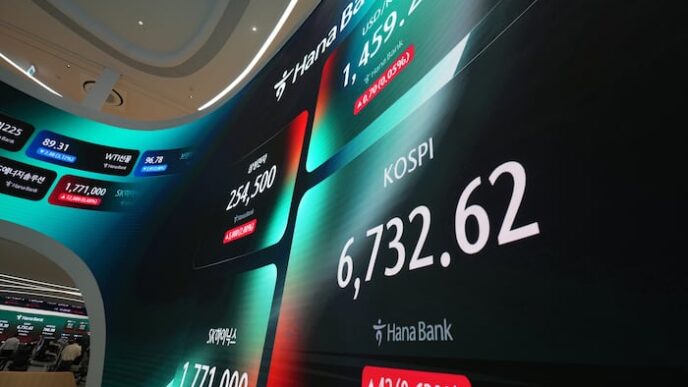
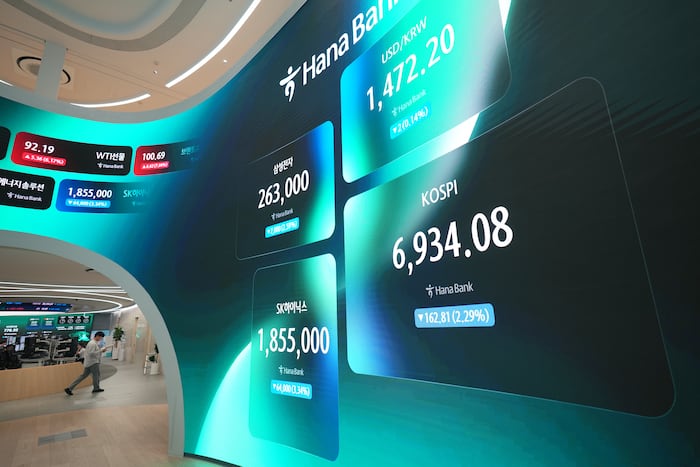
Global financial markets experienced significant turbulence on July 24, 2026, as investors navigated a complex landscape of falling oil prices, a sharp sell-off in artificial intelligence-related stocks, and mounting concerns about escalating trade tensions. Asian markets closed lower while European exchanges managed to gain ground, painting a picture of mixed sentiment across the world’s major trading centers.
Wall Street Struggles Through Volatile Week
The S&P 500 edged up just 0.1% during Friday’s trading session, though the benchmark index remained on track for its second consecutive losing week—a pattern not seen since March. The Dow Jones Industrial Average posted a modest gain of 133 points, representing a 0.3% increase as of mid-morning trading on the East Coast.
However, the technology-heavy Nasdaq Composite told a different story, falling 0.5% as major semiconductor and technology companies faced intense selling pressure. The divergence between the indexes highlighted growing investor anxiety about the sustainability of the artificial intelligence boom that has driven much of this year’s market gains.
- Micron Technology shares plummeted 6% during the session
- Broadcom declined 2.3%, adding to tech sector woes
- Both companies’ large market capitalizations amplified their impact on broader indexes
- The Nasdaq faced heavier losses despite more S&P 500 stocks gaining than losing
Oil Prices Retreat from Critical $100 Threshold
Energy markets provided some relief to investors after Brent crude oil, the international benchmark, fell 3.5% to settle at $97.19 per barrel. This decline came after prices had surged above the psychologically important $100 mark on July 23, 2026, driven by concerns about supply disruptions related to the ongoing U.S.-Iran conflict in the Middle East.
Before the Iran conflict began in late February, Brent crude was trading around $72 per barrel, representing a dramatic increase that has squeezed consumers and businesses worldwide.
The elevated energy prices have already translated into pain at the pump for American consumers. According to AAA, a gallon of gasoline now costs $4.10 nationally. While this figure has retreated from the spring highs when the Middle East conflict intensified, it remains nearly a dollar higher than the same period last year, putting significant strain on household budgets.
Trade War Escalation Adds to Market Uncertainty
Compounding investor concerns, the United States government implemented a fresh round of tariffs targeting dozens of nations on July 24, 2026. The new levies affect nearly all U.S. imports and are paid by companies importing goods, who typically pass these additional costs along to consumers in the form of higher prices.
This latest trade action came as temporary stopgap measures were set to expire, following a significant Supreme Court ruling that struck down previous tariff policies. The combination of rising energy costs and expanded tariffs has raised the specter of accelerating inflation, a scenario that could force the Federal Reserve’s hand on monetary policy.
Federal Reserve Rate Decision Looms Large
The Federal Reserve is scheduled to meet later this month, and market participants are closely watching for signals about the central bank’s next move. Rising inflation earlier this year already dashed hopes for interest rate cuts, and Wall Street sentiment has shifted dramatically toward expecting a potential rate increase.
- CME FedWatch data shows a nearly 36% probability of a rate hike at the upcoming meeting
- Markets are anticipating at least one rate increase by year’s end
- The 10-year Treasury yield eased slightly to 4.67% from 4.71% the previous day
- Bond market movements provided some relief to equity investors
A rate increase would be employed by the central bank as a tool to cool inflation, though it would also increase borrowing costs for businesses and consumers, potentially slowing economic growth in the process.
Corporate Earnings Reveal Growing Concerns
The latest round of corporate earnings reports has shown that companies continue to post profit growth, but cracks are beginning to appear. American Express shares fell 6% despite reporting a jump in quarterly profit, as the financial services giant maintained its full-year forecast while increasing spending to retain wealthy customers amid intensifying competition.
Perhaps more concerning for investors is the growing skepticism around artificial intelligence investments. Technology giants like Alphabet and Nvidia have poured billions of dollars into AI development, but market participants are increasingly questioning whether these massive expenditures will generate returns sufficient to justify the lofty stock valuations that have propelled markets higher throughout 2026.
For Miami’s business community and Latin American investors with exposure to U.S. markets, the current environment demands careful attention. The confluence of geopolitical tensions, trade policy uncertainty, and questions about the durability of the AI-driven rally suggests that volatility may persist in the weeks ahead as the Federal Reserve prepares to make its next crucial decision on interest rates.