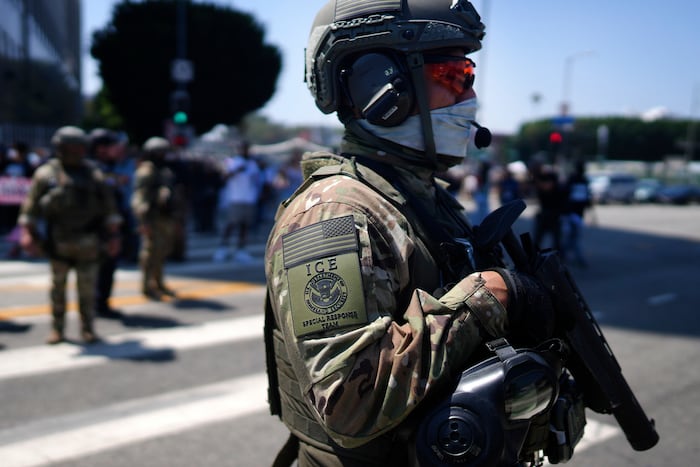
The Immigration and Customs Enforcement agency announced on August 7, 2026, that field officers nationwide will be equipped with body-worn cameras by the end of September. However, the ICE body camera policy reveals a critical caveat that directly affects Miami’s vibrant immigrant community: footage will only be released to the public when the agency determines it serves its own best interests.
This announcement arrives during an intensified immigration enforcement period under President Donald Trump’s administration. For the thousands of Latin families calling Miami home, understanding what this policy means for accountability and transparency has become essential knowledge for navigating daily life in South Florida.
What the ICE Body Camera Policy States
The policy, issued in February 2025, establishes that ICE will promptly release video of shootings and other encounters in which its agents cause death or serious injury. However, the release only happens after determining it is in the best interests of the agency to do so.
This language gives the ICE director broad discretion over what the public sees. According to experts who study law enforcement accountability, this essentially allows the agency to release recordings that reflect positively on its image while potentially keeping others hidden from public view.
Officers must activate their cameras during routine enforcement activities. This includes making arrests, executing search warrants, and responding to emergencies. The footage captures critical moments that could prove vital in legal proceedings or community oversight efforts.
How Footage Release Decisions Work
After shootings or other serious confrontations occur, a special committee reviews the footage. This committee includes top ICE officials and lawyers who recommend whether to release recordings promptly to the public.
If the committee approves release, the recording could become available within 72 hours. However, if ICE’s director finds specific and compelling circumstances justify withholding the video, they have authority to block or indefinitely delay the release.
The policy does not elaborate on what circumstances would justify withholding footage. ICE did not respond to questions from The Associated Press about how such decisions would be made, leaving community advocates concerned about the lack of transparency.
“In some ways, ICE is saying the quiet part out loud. Body-worn cameras are being used as contemporary image-work tools to present the police to the public in the most favorable way possible.”
This assessment comes from Professor Christopher Schneider of Brandon University in Canada, co-author of the book Police Body-Worn Cameras: Media and the New Discourse of Police Reform.
Comparison With Other Law Enforcement Agencies
Body camera footage release practices vary dramatically across the United States. Understanding these differences helps Miami residents contextualize what ICE’s approach means for their community.
In Chicago, a police watchdog agency routinely releases video of shootings and other serious use-of-force incidents within 60 days. This establishes a clear timeline that communities can rely upon when seeking accountability.
Meanwhile, Philadelphia’s police department very rarely uses its discretion to release video and has no formal policy for when to do so. ICE’s approach falls closer to this end of the spectrum, with even more explicit language about protecting agency interests.
Professor Schneider noted that while selective releases are routine in some law enforcement agencies, such practices usually are not so clearly contemplated in official policy. The explicit nature of ICE’s language has raised concerns among transparency advocates.
Recent Incidents Raising Community Concerns
The body camera rollout comes after recent fatal shootings by officers enforcing the immigration crackdown. These incidents have intensified pressure for accountability measures that cameras could theoretically provide.
One notable case involves the January shooting of Alex Pretti in Minneapolis. This incident was captured on agents’ cameras from Customs and Border Protection, ICE’s sister agency. Despite the existence of footage, CBP has not released it to the public.
CBP Commissioner Rodney Scott told lawmakers in February that the video and other materials were under investigation. He stated they would be made public when it’s appropriate, without providing a specific timeline.
Professor Schneider said he does not expect ICE to release footage of fatal shootings given the agency’s stated policy priorities. This prediction concerns community members who view body cameras as essential accountability tools.
Privacy Protections for Officers
Even when ICE does decide to release footage, the policy requires significant redactions. All officers’ identifying features must be removed to preserve their privacy.
This includes redacting faces, names, and badge numbers from any publicly released recordings. While officer safety concerns are legitimate, critics argue these protections further limit the accountability value of body camera programs.
The redaction requirements mean that even released footage may not allow community members or legal advocates to identify specific officers involved in incidents. This complicates efforts to track patterns of behavior or file formal complaints.
What This Means for Miami’s Latin Community
For Miami’s substantial immigrant population, understanding your rights during ICE encounters remains crucial. While officers will now wear cameras, the footage may not automatically become available if incidents occur.
Katherine Hawkins, senior legal analyst at the nonprofit Project On Government Oversight, offered a sobering assessment of the policy’s practical impact. She acknowledged that having body-worn camera footage is better than not having it, since courts could demand it for review during legal proceedings.
However, Hawkins emphasized the policy’s significant limitations for public accountability purposes.
“Without any clear way for the public to get access to it, it doesn’t do much good. It’s not unheard of for agencies to delay or withhold or selectively edit footage at all, but to say that explicitly in policy is concerning.”
Residents should understand that while cameras may capture interactions, accessing that footage through normal public channels may prove extremely difficult or impossible depending on agency decisions.
Taxpayer Investment and Accountability Questions
American taxpayers are contributing tens of millions of dollars to pay for the body camera program. This significant public investment raises questions about whether citizens will see returns in the form of enhanced transparency.
The policy’s structure means that despite this substantial financial commitment, taxpayers may be kept in the dark about high-profile confrontations. This applies particularly to the immediate aftermath of serious incidents when public attention is highest.
Advocacy organizations continue pushing for clearer guidelines on footage release. They argue that public funding should come with public access, particularly for incidents involving serious injury or death.
Understanding Your Rights During ICE Encounters
Regardless of body camera policies, Miami residents should know their rights when interacting with immigration enforcement officers. Community organizations throughout South Florida offer know-your-rights workshops and legal resources.
You have the right to remain silent during ICE encounters. You are not required to answer questions about your immigration status, birthplace, or how you entered the country.
If officers come to your home, you are not required to open the door unless they have a warrant signed by a judge. Understanding these protections helps community members navigate challenging situations.
Local immigration attorneys recommend carrying know-your-rights cards and having emergency contacts readily available. These practical steps provide protection regardless of whether body camera footage ever becomes accessible.
Looking Ahead to September Rollout
The full body camera deployment will complete by end of September 2026. This deadline concludes years of delays in implementing the program across ICE field operations nationwide.
While the cameras represent a step toward documentation of enforcement activities, the policy governing their use leaves significant questions about actual accountability improvements. Community advocates plan to monitor implementation closely.
Miami’s immigrant communities will continue watching how the policy plays out in practice. Whether the cameras ultimately serve transparency goals or primarily protect agency interests remains to be seen in the months ahead.
For now, understanding that cameras exist but footage access is limited helps residents make informed decisions about their interactions with immigration enforcement and their expectations for accountability measures.