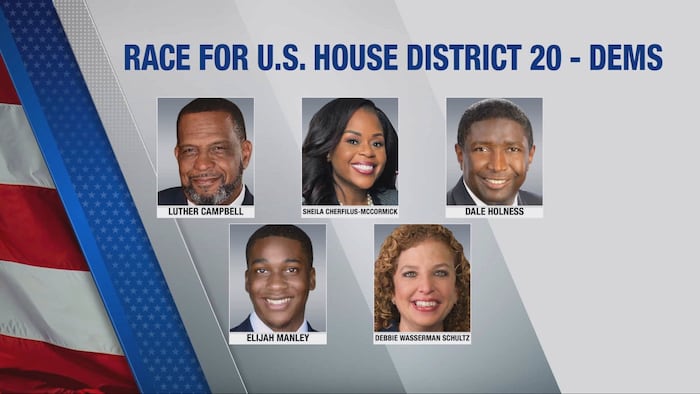
The race for Florida’s newly redrawn Congressional District 20 is heating up as five Democratic candidates prepare to face off in the August 18 primary election. With affordability and cost of living dominating voter concerns across the Sunshine State, each contender is presenting their vision for economic relief in what has become one of the most closely watched congressional races of this election cycle.
Cost of Living Takes Center Stage in Voter Priorities
According to a recent University of North Florida poll, a striking 50 percent of likely midterm election voters identified affordability and cost of living as the most important problem facing Florida. This economic anxiety has shaped the campaign messaging of all five candidates seeking the Democratic nomination, each offering distinct approaches to address the financial pressures facing South Florida families.
The diverse field includes well-known figures from various backgrounds: rap music executive and free speech activist Luther Campbell, former Broward Mayor and Commissioner Dale Holness, community organizer Elijah Manley, and current U.S. Representative Debbie Wasserman Schultz, who is seeking this seat following district boundary changes.
Former Congresswoman Seeks Political Comeback
Perhaps the most controversial figure in the race is former U.S. Representative Sheila Cherfilus-McCormick, who resigned from Congress ahead of a threatened expulsion by the House Ethics Committee. Her departure came following her indictment on charges of stealing federal funds, allegations she has firmly denied. Despite these legal challenges, she is attempting to reclaim her seat and has outlined her priorities for addressing constituent concerns.
“The biggest issue that we have with cost of living, especially for our district, is the economy. Several prices have gone up when it comes to food, and we’re seeing that throughout the country. Creating some kind of package or pot for seniors, so they can get more funding, could be done with increasing the COLA,” stated Cherfilus-McCormick regarding her approach to economic challenges.
Candidates Present Diverse Economic Solutions
Luther Campbell has positioned his campaign as a grassroots movement, emphasizing a $5 donation model free from special interest influence. His economic platform centers on several key initiatives:
- Job creation through port expansion projects
- An affordable housing plan called “Built by Us for Us”
- Federal tax credits to attract entertainment industry corporations
- Subsidies to help seniors over 50 cope with rising insurance costs
- Bringing federal budget allocations back to the district
Campbell stressed the importance of creating high-paying jobs and addressing the housing crisis that has pushed many longtime residents out of their communities. His entertainment industry background informs his strategy to attract major networks and corporations to the district.
Dale Holness, leveraging his experience as a former Broward mayor, has focused heavily on the housing crisis as the primary economic challenge facing constituents. He pointed out that the federal housing voucher system has not been expanded since 2017, leaving countless families on waiting lists and contributing to the homelessness crisis.
The Stakes for South Florida Voters
The winner of the Democratic primary will advance to face a Republican challenger in November, making this contest particularly significant for the political landscape of South Florida. The district’s demographics and the national attention on Florida politics have elevated the importance of this race beyond its local implications.
For many voters in Congressional District 20, the choice comes down to which candidate can most effectively advocate for economic relief in Washington. Property taxes, insurance costs, and the overall affordability of living in South Florida have reached crisis levels for many families, particularly seniors on fixed incomes who find themselves struggling to cover basic necessities.
The August 18 primary date gives candidates limited time to make their case to Democratic voters, with early voting and campaign events intensifying in the coming weeks. As the field presents competing visions for economic recovery and congressional representation, voters will ultimately decide which approach best aligns with their hopes for affordable living in South Florida.
This election represents not just a local political contest but a referendum on how communities should address the growing affordability crisis affecting millions of Floridians across income levels and backgrounds.