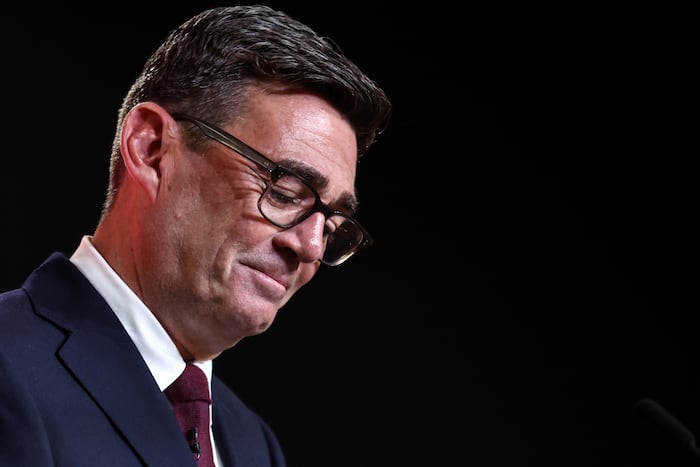
The United Kingdom witnessed yet another change in leadership on July 20, 2026, as Andy Burnham officially took office as the nation’s seventh prime minister in just over a decade. The former Mayor of Greater Manchester stepped into 10 Downing Street following the resignation of Keir Starmer, who departed after serving only two years despite winning a landslide election victory in 2024.
Burnham’s ascension to the top position in British politics was formalized during a traditional ceremony at Buckingham Palace, where King Charles III asked him to form a new government. The moment, captured in an official photograph released by the palace showing the two men shaking hands, marked the completion of what has become an all-too-familiar ritual in British politics over recent years.
A Promise to Transform British Politics
In his inaugural address as prime minister, Burnham acknowledged the challenging circumstances surrounding his appointment and the rapid turnover of leadership that has characterized British politics since 2016. He expressed awareness of the “revolving door” he was walking through at the historic residence of British prime ministers.
“This is a moment for reflection and new resolution. It requires my generation of politicians to raise our game and rise to the new challenge. Britain needs to show the world that we can regain our stability once again, and that is our challenge to make politics work, to make it work better.”
The new prime minister outlined an ambitious vision centered on decentralizing power away from London and returning control of essential services to the public. He characterized his approach as a “circuit breaker” for a system he believes has been heading in the wrong direction since the privatization wave of the 1980s.
Key Priorities for the New Government
Burnham’s initial policy announcements focused on several critical areas that have long plagued British society. His agenda includes:
- Ending street homelessness across the United Kingdom
- Decentralizing governmental power to local communities
- Placing essential public services under stronger public control
- Making daily necessities more affordable for ordinary citizens
- Creating a more collaborative political environment focused on problem-solving
The new leader promised to deliver details of a comprehensive 10-year plan on July 21, 2026, which supporters and critics alike will scrutinize closely for specifics on implementation.
Starmer’s Departure Marks End of Short-Lived Tenure
Keir Starmer’s resignation came after what officials described as missteps and judgment errors that eroded his standing with both the Labour Party membership and the British public. Despite inheriting a massive parliamentary majority, Starmer struggled to translate electoral success into effective governance.
In his farewell remarks outside 10 Downing Street, the outgoing prime minister maintained a positive tone, claiming Britain was “stronger and fairer than it was two years ago” when he assumed office. He departed with characteristic British understatement, stating that his “work is done” and that he left “with good grace” and “a smile.”
Burnham secured the Labour leadership without facing opposition, receiving nominations from 379 of the 403 Labour lawmakers in the House of Commons. This overwhelming support within the parliamentary party provided him with a strong mandate to lead, though questions remain about his ability to connect with the broader electorate.
Challenges Ahead for the New Administration
The incoming prime minister inherits a complex set of domestic and international challenges that contributed to his predecessor’s downfall. These include:
- A persistently sluggish British economy
- An ongoing cost-of-living crisis affecting millions of households
- Public services stretched beyond capacity
- Growing concerns about immigration policy
- International conflicts in Ukraine and the Middle East
Political analysts have noted that Burnham’s success will largely depend on his ability to generate significant economic growth, which has remained elusive for successive British governments. Without substantial improvements in economic performance, funding his ambitious social programs will prove extremely difficult.
Britain’s parliamentary system allows governing parties to replace their leaders without triggering a general election, meaning Burnham could potentially remain in office until 2029. However, the political instability that has characterized recent British politics suggests that nothing can be taken for granted in the turbulent landscape of UK governance.