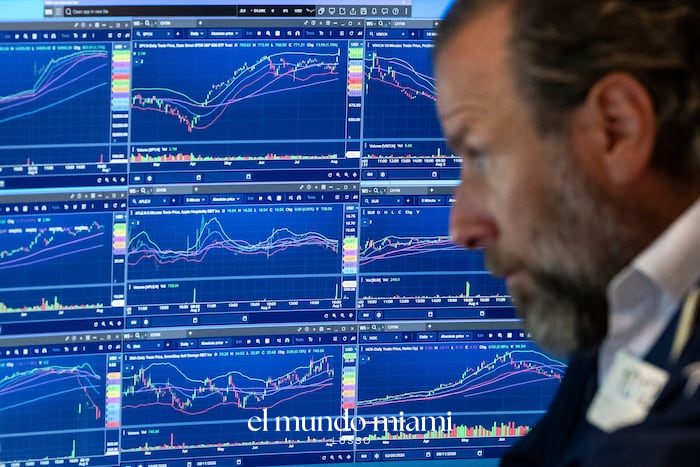
US stocks delivered a powerful rally on August 7, 2026, as Wall Street reacted to surprising employment data showing employers cut 23,000 jobs last month. The unexpected weakness in the labor market sparked optimism that the Federal Reserve might delay interest rate increases, sending major indexes to fresh highs and giving Miami investors reason to pay close attention to their portfolios.
For the Latin community in Miami, where small business ownership and real estate investment remain cornerstones of wealth building, these market movements carry significant implications. Lower interest rates could mean better borrowing conditions for entrepreneurs and homebuyers alike, while a weakening job market signals caution for those planning major financial decisions.
Wall Street Celebrates Weak Jobs Data
The S&P 500 climbed 47.68 points, or 0.6%, closing at 7,757.64 and surpassing the all-time high set just days earlier on August 5. This benchmark index has maintained a remarkable record-breaking streak throughout 2026, offering consistent gains to diversified investors.
The Dow Jones Industrial Average added 151.83 points, rising 0.3% to reach 54,036.93. While falling just short of its own record from August 6, the blue-chip index demonstrated resilience. The Nasdaq composite led the charge with a 1.3% surge, jumping 342.26 points to close at 26,690.62.
Technology giants powered much of the market’s advance. Nvidia soared 2.3% while Broadcom gained 1.7%, reflecting continued investor confidence in the tech sector despite broader economic concerns.
What Job Cuts Mean for Miami Families
The employment report revealed more than just the headline 23,000 job losses. Government statisticians also revised figures for May and June, slashing a combined 103,000 positions from previously reported payrolls. This paints a dimmer picture of the labor market, which had been one of the economy’s brighter spots.
For Miami’s Latino workforce, concentrated in hospitality, construction, and service industries, these numbers warrant attention. While South Florida’s economy has shown resilience, national employment trends eventually ripple through local markets.
Peter Graf, chief investment officer at Amova Asset Management Americas, offered a word of caution in his research note:
Although the stock market is likely to welcome the dovish implications of the report, investors should be wary of the future growth potential of an economy where fewer people are working.
This perspective reminds Miami investors that stock market gains do not always translate to real economic prosperity for working families.
Bond Market Reaction and Treasury Yields
The bond market responded even more dramatically to the employment data. The 10-year Treasury yield dropped to 4.64% from 4.67% immediately before the jobs report, briefly touching 4.60% before stabilizing.
More significantly, the two-year Treasury yield, which closely tracks expectations for Federal Reserve policy, fell to 4.20% from 4.22%. This movement signals that traders increasingly believe the Fed may hold off on raising rates.
For Miami homebuyers watching mortgage rates, these bond market movements offer cautious optimism. Treasury yields directly influence mortgage pricing, and any sustained decline could provide relief for those struggling with elevated borrowing costs.
Read more: Miami Real Estate Trends 2026: What Latin Buyers Need to Know
Federal Reserve Rate Decision Outlook
The Federal Reserve has maintained steady interest rates amid persistent inflation concerns, fueled partly by rising oil prices connected to the US conflict with Iran. Wall Street anticipates at least one rate increase before year’s end, though forecasts continue shifting.
According to CME FedWatch data, expectations for a rate cut in September dropped significantly:
- 42% probability of September rate cut on August 7
- 55% probability just one day earlier on August 6
- 67% probability one week prior
This rapid shift demonstrates how quickly market sentiment can change based on economic data. The Fed faces a delicate balancing act between supporting employment and controlling inflation.
Critical Inflation Data in the Week Ahead
Miami investors should mark their calendars for several important inflation updates arriving in mid-August 2026. The Consumer Price Index (CPI) report will be the most closely watched indicator, measuring the cost of goods and services for everyday consumers.
Wall Street economists expect July inflation to show a 3.4% annual rate, representing a slight cooling from June’s 3.5% reading. However, inflation has stubbornly remained above 3% for most of 2026, keeping pressure on household budgets across South Florida.
Ellen Zentner, chief economic strategist for Morgan Stanley Wealth Management, explained the stakes:
Today’s weak payrolls print may ease the pressure on the Fed to raise rates at its September meeting, but next week’s inflation data will still likely be the deciding factor.
For Latino families managing tight budgets, sustained inflation means continued pressure on grocery bills, rent payments, and everyday expenses.
Corporate Earnings Show Strong Performance
Beyond employment data, corporate earnings have dominated financial headlines. Companies in the S&P 500 are on track for their strongest quarterly growth since 2021, with nearly 90% of firms having reported second-quarter results.
This earnings strength has supported the stock market’s impressive run despite broader economic uncertainties. For Miami investors with retirement accounts or brokerage portfolios, strong corporate profits translate to portfolio growth.
The combination of solid earnings and potential interest rate relief created the conditions for the market’s second consecutive week of gains, marking a strong start to August after several weaker months.
What Miami Investors Should Consider Now
The current market environment presents both opportunities and risks for South Florida’s Latino community. Here are key considerations for different financial situations:
- Homebuyers: Monitor Treasury yields and mortgage rate trends closely as Fed policy evolves
- Small business owners: Weaker employment data could signal softening consumer demand
- Stock investors: Diversification remains crucial as markets reach record highs
- Workers: Build emergency savings given labor market uncertainty
The interplay between employment, inflation, and interest rates will continue shaping financial conditions for Miami families throughout the remainder of 2026.
Understanding the Fed’s Difficult Position
The Federal Reserve faces a challenging dilemma that directly affects Miami’s economy. Raising interest rates can help control inflation by slowing economic growth, but this same action could further weaken an already softening job market.
Businesses and Wall Street generally prefer lower interest rates because they boost investment and make borrowing more affordable. This could help strengthen employment but risks worsening inflation that has proven stubbornly persistent.
For Miami’s construction industry, real estate developers, and hospitality businesses, Fed policy choices will influence hiring decisions, expansion plans, and consumer spending patterns throughout South Florida.
Looking Ahead in August 2026
As Miami’s Latin community navigates these economic crosscurrents, staying informed about market developments becomes essential for sound financial planning. The August 7 rally demonstrated how quickly conditions can shift based on a single economic report.
The weeks ahead will bring crucial data points that could reshape expectations for Fed policy and market direction. Whether you are managing a retirement portfolio, considering a home purchase, or running a small business, understanding these dynamics helps you make better financial decisions.
Why did US stocks rise after job losses were announced?
Stocks rose because weaker employment data suggests the Federal Reserve may delay interest rate increases. Lower rates benefit businesses and investors by reducing borrowing costs and supporting stock valuations.
How does this affect Miami homebuyers?
Treasury yield declines following the jobs report could eventually translate to lower mortgage rates, potentially providing relief for Miami homebuyers facing elevated borrowing costs in the competitive South Florida market.
What inflation rate does Wall Street expect for July 2026?
Economists anticipate the Consumer Price Index will show July inflation at a 3.4% annual rate, slightly lower than June’s 3.5% reading but still above the Federal Reserve’s 2% target.
When will the Fed make its next interest rate decision?
The Federal Reserve’s next policy meeting includes a September decision point. Market expectations for a rate cut at that meeting dropped to 42% following the August 7 jobs report.