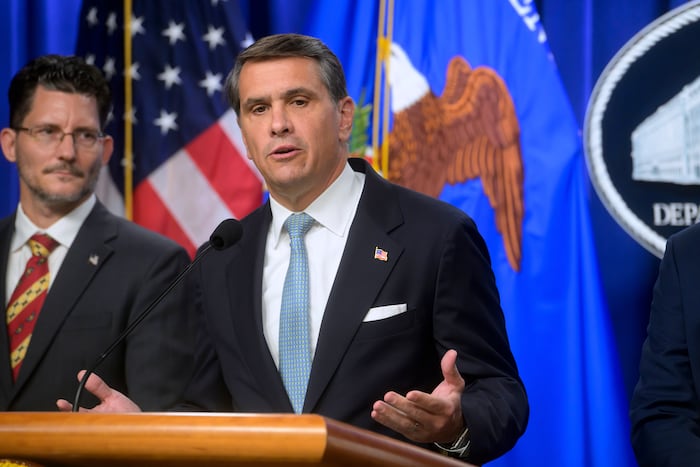
In a dramatic overnight session on August 8, 2026, the Senate confirmed Todd Blanche as the nation’s next Attorney General by the slimmest possible margin. The 50-49 vote places Trump’s former personal defense lawyer at the helm of the Department of Justice, marking a pivotal moment in American political history that carries significant implications for Miami’s diverse Latin community.
The confirmation of Todd Blanche as Attorney General came after an intense political battle that kept senators working through the night. For Miami residents, particularly those in the Latin community who closely follow developments in Washington, this appointment signals a new chapter in federal law enforcement that could affect everything from immigration policies to civil rights protections.
The Narrow Confirmation Vote That Made History
The Republican-led Senate’s decision came down to a single vote, with two Republican senators breaking ranks to oppose the nomination. Senator Susan Collins of Maine and Senator Lisa Murkowski of Alaska joined every Democratic senator in voting against Blanche’s confirmation.
This marks only the second confirmed Attorney General since President Donald Trump returned to the White House. The first, Pam Bondi, was fired in April 2026, paving the way for Blanche to take over in an acting capacity before his formal confirmation.
The decisive vote came from Senator Bill Cassidy of Louisiana, who announced his support on the morning of August 7. Cassidy’s endorsement broke the deadlock that had stalled Blanche’s nomination for weeks.
Controversial Settlement That Nearly Derailed the Nomination
The path to confirmation proved extraordinarily rocky, primarily due to concerns over a controversial settlement involving Trump’s lawsuit against the IRS. The settlement initially proposed a $1.8 billion compensation fund dubbed the “Anti-Weaponization Fund.”
This fund would have compensated individuals who claimed mistreatment by the criminal justice system, including those who participated in the January 6, 2021 Capitol attack. Additionally, the settlement included provisions to shield Trump and his family members from future IRS tax audits.
Under intense pressure from Republican senators, Blanche formally rescinded the controversial fund in writing. Senator John Cornyn of Texas and Senator Thom Tillis of North Carolina led negotiations that ultimately resulted in Blanche abandoning the proposed compensation program.
Senator Cassidy’s Decisive Vote and Reasoning
In explaining his crucial support, Senator Cassidy offered a nuanced perspective on the nomination. He suggested that Blanche’s unique position as Trump’s former criminal defense lawyer might actually make him more effective at pushing back against presidential demands.
“This is not a referendum on President Trump. It is a decision regarding Mr. Blanche in very specific circumstances.”
Cassidy, who lost his primary election earlier this year to a Trump-backed challenger, argued that no other nominee could potentially run the department more effectively under the current administration. His reasoning centered on Blanche’s intimate knowledge of how to navigate Trump’s expectations.
Democratic Opposition and Historical Concerns
Senator Dick Durbin of Illinois, the top Democrat on the Senate Judiciary Committee, issued a stark warning to his colleagues about the confirmation. He characterized the vote as a potential historical mistake with lasting consequences.
“If there is ever a moment in history when we need an Attorney General above reproach, who is clearly dedicated to ending corruption, even at the highest level of our government, it’s right now.”
Durbin pleaded with senators not to find themselves on the “wrong side” of history. His concerns echoed those of many legal experts and political observers who questioned whether Blanche could maintain the Justice Department’s traditional independence from White House influence.
Blanche’s Response to Confirmation
Following the early morning vote, the newly confirmed Attorney General took to social media to express his gratitude. Blanche described himself as “deeply honored by the trust and confidence President Trump has placed in me.”
He also thanked senators for their late-night work in confirming his nomination. The social media statement marked his first official communication as the confirmed leader of the nation’s top law enforcement agency.
Legal analysts note that the formal confirmation could embolden Blanche to pursue the administration’s agenda more aggressively than he did in his acting capacity. This includes continuing investigations into individuals Trump has publicly identified as political adversaries.
Justice Department Independence at Stake
The confirmation fight exposed deep bipartisan concerns about installing a close Trump ally at the helm of a department that has historically maintained independence from presidential influence. The Justice Department has long prided itself on operating separately from White House political considerations.
Critics argue that Blanche’s role as Trump’s personal criminal defense lawyer creates an unprecedented conflict of interest. They point to his swift actions upon taking over in an acting capacity, including accelerating investigations into Trump’s perceived political enemies.
Supporters counter that Blanche’s legal expertise and familiarity with complex federal cases make him well-suited for the role. They emphasize his willingness to rescind the controversial settlement provisions as evidence of his ability to make independent decisions.
What This Means for Miami’s Latin Community
For Miami’s vibrant Latin community, the new Attorney General’s tenure could influence several key areas of daily life. Federal law enforcement priorities, immigration enforcement strategies, and civil rights protections all fall under the Justice Department’s purview.
Community leaders in Little Havana, Hialeah, and other predominantly Latin neighborhoods are watching closely to see how Blanche’s department handles cases involving immigrant communities. The Justice Department’s approach to sanctuary city policies and deportation proceedings could directly impact thousands of Miami families.
Business owners throughout Miami-Dade County are also monitoring developments, as federal enforcement priorities can affect everything from employment verification requirements to regulatory compliance standards.
The Departure of Pam Bondi
Blanche’s confirmation comes just months after Pam Bondi, the former Florida Attorney General, was fired from the position in April 2026. Bondi’s departure surprised many political observers, though the administration provided limited explanation for the sudden change.
During the transition period, Blanche served as acting Attorney General, giving him time to begin implementing administration priorities before facing Senate confirmation. This included the controversial settlement announcement that would later nearly derail his nomination.
The rapid turnover at the nation’s top law enforcement position has raised questions about stability within the Justice Department. Career employees and legal professionals have expressed concerns about maintaining consistent policies and procedures amid leadership changes.
Senate Judiciary Committee Proceedings
Before reaching the full Senate floor, Blanche’s nomination advanced through the Senate Judiciary Committee earlier in the week of August 8. The committee vote came only after Blanche formally agreed in writing to abandon the controversial settlement provisions.
The negotiations between Blanche and concerned Republican senators lasted several weeks. Senator Cornyn and Senator Tillis emerged as key figures in brokering the deal that ultimately unlocked the committee vote.
Even after the committee advanced the nomination, uncertainty remained about whether Blanche could secure enough votes for final confirmation. Senator Murkowski’s announcement that she would join Collins in opposition added last-minute drama to the proceedings.
Looking Ahead: The Justice Department Under Blanche
With confirmation now complete, attention turns to what the Justice Department will look like under Blanche’s official leadership. His previous actions in an acting capacity suggest he will continue prioritizing investigations aligned with administration interests.
Legal experts anticipate potential challenges to Blanche’s authority from various quarters, including potential lawsuits questioning the propriety of certain enforcement actions. The narrow confirmation vote may also limit his political capital for pursuing the most controversial initiatives.
For everyday Americans, including Miami’s substantial Latin population, the coming months will reveal how this confirmation translates into tangible policy changes. Federal prosecution priorities, civil rights enforcement, and cooperation with local law enforcement agencies will all bear Blanche’s influence.
What was the final Senate vote count for Todd Blanche’s confirmation?
The Senate confirmed Todd Blanche as Attorney General by a narrow 50-49 vote on August 8, 2026. Two Republican senators, Susan Collins and Lisa Murkowski, joined all Democratic senators in opposing the nomination.
What was the controversial $1.8 billion fund that nearly blocked the nomination?
The Anti-Weaponization Fund was a proposed $1.8 billion compensation program for individuals who claimed mistreatment by the criminal justice system, including January 6 Capitol attack participants. Blanche formally rescinded this proposal under pressure from Republican senators.
Who was the decisive vote in Blanche’s confirmation?
Senator Bill Cassidy of Louisiana cast the decisive vote in favor of Blanche’s confirmation. He announced his support on August 7, breaking the deadlock that had stalled the nomination.
Why did some senators oppose Blanche’s nomination?
Opponents cited concerns about Blanche’s loyalty to Trump and the controversial IRS settlement that would have shielded Trump and his family from tax audits. Critics also questioned whether he could maintain the Justice Department’s traditional independence from the White House.